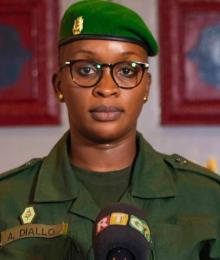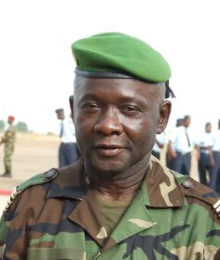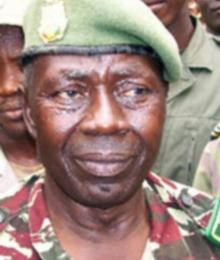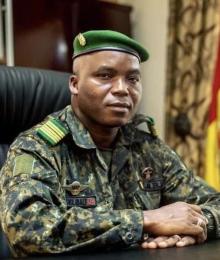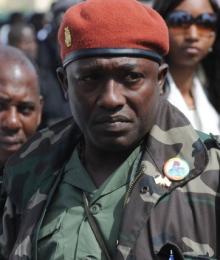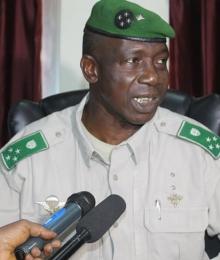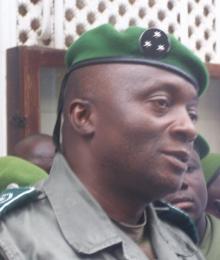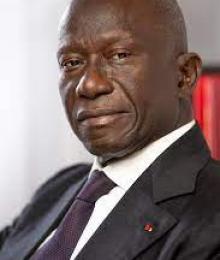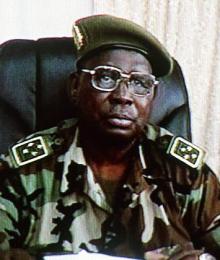



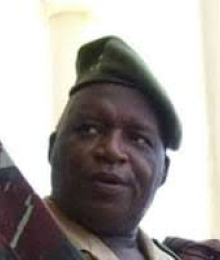
General Arafan Ousmane Camara (January 2, 1948 - January 6, 2008) was an exceptional Guinean military officer and politician, recognized as the only general in the country to have completed a full military curriculum, from soldiers' school to the prestigious École de Guerre in Paris, including training at the military academies of Moscow and China. Appointed Minister of National Defense on March 28, 2007, during a political crisis marked by large popular demonstrations, he was then considered Guinea's youngest general at 56 years old.
His tenure at the head of Defense was cut short on May 12, 2007, when he was dismissed following a serious military mutiny in which soldiers demanded better working conditions and the resignation of their leadership accused of embezzling wages. Despite this dismissal, he briefly held the position of Army Chief of Staff in 2007 before passing away on January 6, 2008, in Saint-Mandé, France, four days after his sixtieth birthday, leaving behind the legacy of an unprecedented military academic career in the history of the Guinean army.
Introduction
General Arafan Ousmane Camara, born on January 2, 1948, in Bagna, Guinea, left his mark on Guinean military history through his exceptional career and meteoric rise within the armed forces. He passed away on January 6, 2008, in Saint-Mandé, France, just days after his sixtieth birthday. This career military officer left an indelible imprint on Guinea's contemporary history.
What particularly distinguished Arafan Camara from his peers was his incomparable military academic background. Recognized as the only Guinean general to have completed the full military training curriculum, he climbed every rung of military education with remarkable determination. His career began at the soldiers' school, then the officers' school, before completing the captain's course. His thirst for knowledge and excellence then led him to the most prestigious international military academies.
Distinguished International Training
General Camara's training was enriched by diverse international experiences that shaped his strategic and tactical vision. He notably studied at the Moscow Military Academy, then at the Chinese Military Academy, demonstrating his ability to adapt to different military doctrines and strategic cultures. His academic journey culminated with his training at the prestigious École de Guerre in Paris, an institution renowned for training the elite of international senior officers.
This exceptional training made him a complete officer, mastering both tactical and strategic aspects of military art. At 56, when he assumed the position of Minister of National Defense, he was considered the country's youngest general, testament to his rapid ascension and recognized competence.
Rise to Highest Responsibilities
In 2004, General Arafan Camara already held the strategic position of Deputy Chief of Staff of the Guinean army. In this capacity, he was involved in sensitive affairs, notably the case of Colonel Mamadouba Camara, arrested on charges of plotting against President Lansana Conté. General Arafan Camara had been tasked with studying this delicate case and submitting proposals to the Head of State, demonstrating the confidence the presidency placed in him.
Minister of National Defense in a Crisis Context
March 28, 2007, marked a decisive turning point in General Camara's career. In a tense political context, marked by large popular demonstrations demanding governmental change, he was appointed Minister of National Defense. His appointment came during the formation of the new government led by Prime Minister Lansana Kouyaté, amid a major political crisis.
This appointment was hailed by the military as marking a renewal of the Guinean army. General Camara's selection did not happen without incident. President Lansana Conté himself personally chose the young division general, crossing out at the last moment the name of Brigadier General Kandet Oumar Touré, Chief of Staff at the Ministry of National Defense, who had appeared on the government list until March 24, 2007.
A Mandate Cut Short by Military Mutiny
However, General Arafan Camara's mandate at the head of National Defense would be short-lived. In early May 2007, the Guinean army was shaken by a serious mutiny that upended the military hierarchy. The soldiers, dissatisfied with their working conditions, demanded payment of salary arrears spanning eight years, catch-up promotions, provision of new uniforms, and above all, the resignation of their senior officers accused of embezzling their wages.
The protest movement, begun on May 2, 2007, quickly gained momentum and spread to different bases throughout the country. Soldiers left their barracks, fired into the air, looted stores, and attacked the property of their hierarchical superiors. This crisis had dramatic consequences, causing nine deaths and 75 injuries among the civilian population, with the majority of victims hit by stray bullets.
Dismissal and Its Consequences
Faced with the scale of the crisis and to respond to the mutinous soldiers' demands, President Lansana Conté carried out a major restructuring of the general staff. On May 12, 2007, less than two months after his appointment, General Arafan Camara was dismissed from his position as Minister of Defense. He was replaced by Army General Mamadou Bailo Diallo, a military officer retired for two years after 48 years of service, reputed to be a field man.
On the same day, General Kerfalla Camara, Army Chief of Staff, was also dismissed and replaced by General Diarra Camara, Commander of the Third Military Region. In total, six army officials were reassigned in this vast restructuring of the Guinean military hierarchy. Despite these presidential concessions, soldiers continued their violent acts for several days, notably looting offices of the United Nations Population Fund (UNFPA) in Conakry.
A Brief Tenure as Chief of Staff
Despite his dismissal from the Ministry of Defense, General Arafan Camara's career did not end there. According to historical archives of the Guinean army, he appears on the list of officers who held the position of Chief of Staff of the Guinean Armed Forces in 2007, succeeding General Kerfalla Camara. This appointment testifies to General Camara's resilience and the continued confidence in his military competence, despite political turbulence.
A Lasting Military Legacy
General Arafan Camara passed away on January 6, 2008, in Saint-Mandé, France, at the age of 60. His death occurred in a context where Guinea continued to face significant political and military tensions. His passing, just days after his birthday, marked the end of an exceptional military career distinguished by academic training unparalleled in the history of the Guinean army.
General Camara's legacy lies in his exemplary career that demonstrates the importance of training and academic excellence in military service. His complete international curriculum, from soldiers' school to the École de Guerre in Paris, passing through the military academies of Moscow and China, remains a model for generations of Guinean officers. Although his tenure at the Ministry of Defense was brief and tumultuous, his contribution to the modernization and professionalization of the Guinean army remains a reference point in the country's contemporary military history.