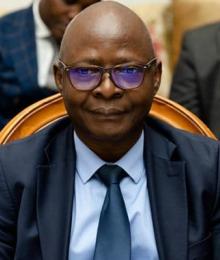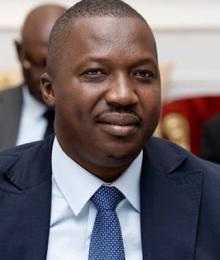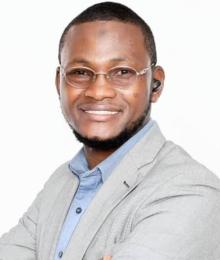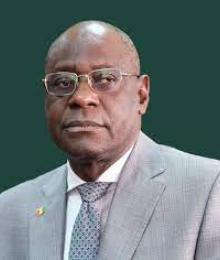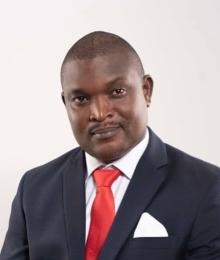



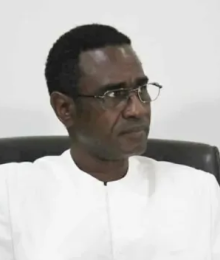
Boubacar Abdoulaye Sadio Barry is a Guinean politician and president of the Bloc for Alternation in Guinea (BAG), a party he leads with a resolutely democratic and inclusive vision. An emerging figure in the Guinean opposition, he has established himself as a unifying leader who advocates for national reconciliation and the transcendence of ethnic and regional divisions. His political project is built around five major pillars: national reconciliation, strengthening the rule of law, equitable economic development, participatory governance, and investment in education.
Designated as a candidate for the December 2025 presidential election by his party's members during the National Convention in October 2025, Sadio Barry enjoys international support, notably from the International Society for Human Rights. However, denouncing serious shortcomings in the electoral process and the absence of political dialogue, he ultimately announced his withdrawal from the presidential race in November 2025, marking a strong protest against what he considers an election whose outcome would be predetermined.
Introduction
Boubacar Abdoulaye Sadio Barry has emerged as one of the rising figures in Guinea's political opposition. As President of the Bloc for Alternation in Guinea (BAG), this charismatic leader represents a new generation of Guinean politicians advocating for profound democratic transformation in the country.
Political Engagement
At the helm of BAG, Sadio Barry has distinguished himself through his unifying discourse and inclusive vision of Guinean politics. Unlike traditional political practices marked by ethnic and regional divisions, he advocates for a reconciled Guinea where every citizen has a place, regardless of their origin. His party positions itself as a credible alternative to established political formations, driven by values of transparency, social justice, and performance.
The BAG president enjoys notable international support, particularly from the International Society for Human Rights (IGFM). Figures such as Dr. Thomas Paul Schirrmacher and Matthias K. Boehning have publicly expressed their support for his political vision, commending his commitment to civil liberties and good governance.
Ambitious Vision for Guinea
Sadio Barry's political project is built around five fundamental pillars. He places national reconciliation at the top of his priorities, proposing the organization of a sovereign national conference focused on truth, justice, and forgiveness. His program also emphasizes strengthening the rule of law, equitable economic development, participatory governance, and education as a lever for progress.
In October 2025, during BAG's National Convention, party members overwhelmingly renewed their confidence in him by designating him as their candidate for the presidential election scheduled for December 2025. This nomination demonstrates his legitimacy within his party and his ability to mobilize support around a coherent societal project.
Critical Opposition in the Face of National Challenges
Sadio Barry does not hesitate to challenge the transitional authorities regarding the crises facing Guinea. Following the tragic fire at the Kaloum fuel depot in December 2023, he called on the National Committee for Rallying and Development (CNRD) to prioritize dialogue and build a national unity pact. In his view, current leaders are not responsible for all the country's problems but must nevertheless foster engagement with all political actors.
However, his position on General Mamadi Doumbouya's candidacy remains firm. He believes that the transition president should not run in the presidential election, citing the transition charter and Guinea's international commitments to the African Union and ECOWAS.
A Meaningful Withdrawal
In November 2025, despite submitting his candidacy file, Sadio Barry ultimately announced his withdrawal from the presidential race. He denounces serious shortcomings in the organization of the election, particularly concerning the electoral deposit payment procedure. More fundamentally, he points to the absence of political dialogue and a climate of widespread discouragement, believing that the election outcome was already predetermined.
This withdrawal illustrates the persistent challenges facing democratic forces in Guinea and marks a significant milestone in the political journey of this leader who continues to carry hope for genuine democratic alternation in his country.