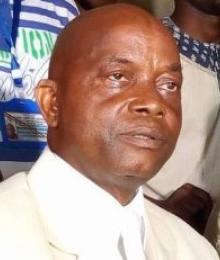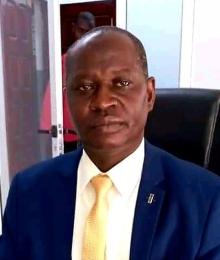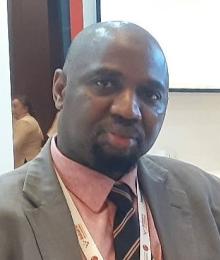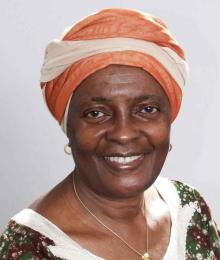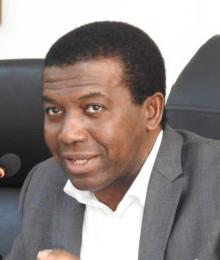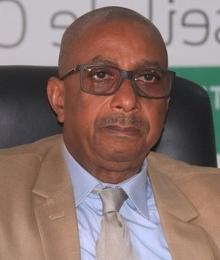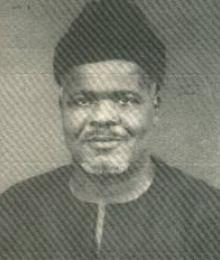


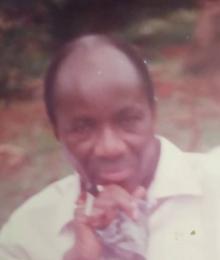
Saliou Coumbassa (February 2, 1932 – September 30, 2003) was a multifaceted Guinean figure — educator, diplomat, and statesman. Born in Baralandé in the prefecture of Boké to a canton chief, he pursued a remarkable academic journey that took him from colonial schools in Côte d'Ivoire and Senegal to the University of Bordeaux in France, before devoting much of his life to teaching and school inspection in Guinea. Appointed Secretary of State for Justice in 1970 by President Sékou Touré, he was arrested the following year and spent nearly a decade at Camp Boiro, the regime's notorious political detention center.
Released in 1981 and rehabilitated following Sékou Touré's death in 1984, he embarked on a second public life under General Lansana Conté, who appointed him ambassador to the United Nations and later Minister of National Education, before he concluded his career as Minister of Social Affairs and Employment in 1991. A Commander of the French Ordre des Palmes Académiques, he remains an emblematic figure of postcolonial Guinea, whose life story embodies both the promise and the tragedy of the First Republic.
Introduction
Saliou Coumbassa (February 2, 1932 – September 30, 2003) stands as one of the most significant figures of postcolonial Guinea, whose singular journey encompassed academic excellence, dedicated public service, and the painful ordeals of the Sékou Touré era. A teacher by training, diplomat by function, and minister by appointment, this native of the Boké prefecture embodies a generation of African leaders shaped by family tradition, colonial schooling, and national ambition.
Origins and Youth in Colonial Guinea
Born on February 2, 1932, in Baralandé, in Guinea's Boké prefecture, Saliou Coumbassa grew up in an environment marked by local prominence and early loss. His father, Alpha Daouda Coumbassa, served as canton chief of Baralandé — a position of authority under French colonial administration. His mother, Salématou Sy, of Toucouleur Fula origin, passed away just two months after his birth. It was therefore his maternal grandmother, Bintou Doumbouya, who took charge of his emotional and cultural upbringing, playing a foundational role in shaping the man he would become.
His schooling began at the elementary school of Boké Centre, where he earned his primary certificate in June 1944 under the tutelage of Bokar Marega, one of the region's first schoolteachers. Recognized for his abilities, he passed the entrance examination for the Camille Guy school in Conakry and in 1945 enrolled at the Bingerville College on the outskirts of Abidjan, in Côte d'Ivoire. There he studied alongside classmates who would themselves go on to become notable figures, including Ousmane Keïta, Sana Sylla, Alpha Bakar Barry, and Charles Diané.
His academic path then led him to the Lycée Van Vollenhoven in Dakar, Senegal, where he earned both his baccalaureate degrees in 1949. He subsequently entered the prestigious École Normale William-Ponty — the great nursery of Francophone African elites — and graduated as a certified elementary schoolteacher.
A Vocation for Teaching
Following his military service, Saliou Coumbassa returned to Guinea in 1957 and began teaching at the École d'Application in Kindia Wassou. This period was marked by a memorable encounter with the poet and writer David Diop, then a colleague, whose politically engaged work resonated deeply with the hopes of an Africa moving toward independence.
He went on to teach at the Friguiagbé Elementary School in Kindia, which he briefly headed. In 1960, a scholarship brought him to the Faculty of Letters and Human Sciences at the University of Bordeaux, France, where in just two years he completed a three-year degree and earned his licence, before continuing at the Institut Supérieur de Littérature Comparée de Gironde with the aim of becoming a professor of literature. Unable to secure a scholarship extension, he could not sit the agrégation examination and returned to Guinea in 1963, where he taught French at the Cours Normal in Kindia Wassou.
His rise through educational administration was swift. In 1964, he was appointed headmaster of the Lycée Classique de Donka in Conakry. The following year, he became academy inspector in Kankan, the capital of Upper Guinea, and then in Labé, in the Fouta Djallon region. In 1969, he reached the pinnacle of his academic career, appointed Inspector General of Education at the Ministry of National Education.
Political Engagement and the Years of Detention
In 1970, President Ahmed Sékou Touré appointed him Secretary of State for Justice, a post in which he succeeded Mohamed Kassory Bangoura. This appointment marked his entry into the regime's most exposed political sphere.
One year later, in 1971, he was arrested. He would spend nine years, six months, and seventeen days at the dreaded Camp Boiro — the political detention center that became synonymous with the horrors of Guinea's First Republic, where thousands of real or alleged opponents were imprisoned, tortured, or executed. Released in 1981, he chose to withdraw from public life, wounded but alive.
Rehabilitation and Return to Public Affairs
The death of Sékou Touré in March 1984 and the military's seizure of power under General Lansana Conté opened a new chapter. Saliou Coumbassa was rehabilitated and reclaimed a place in his country's institutional life. At the National Education Conference of June 1984, he emerged as one of the principal architects of a sweeping overhaul of Guinea's education system, drawing on three decades of pedagogical experience.
He was subsequently accredited as Guinea's Ambassador to the United Nations in New York, representing his country on the international stage — notably as alternate delegate for Elhadj Abdourahamane Sow at the 40th session of the General Assembly in 1985.
On December 22, 1985, General Lansana Conté appointed him Minister of National Education and Scientific Research, the post most emblematic of his entire life's work. In the ministerial reshuffle of February 1990, he was named Minister of Social Affairs and Employment, a position he held until February 1991, when he retired.
Distinctions and International Recognition
In November 1986, during the official state visit of French President François Mitterrand to Guinea, Saliou Coumbassa was awarded the rank of Commander of the French Ordre des Palmes Académiques, a distinction conferred in recognition of his exceptional contributions to education.
Legacy and Family Memory
Saliou Coumbassa passed away on Tuesday, September 30, 2003, leaving behind a large and close-knit family. His wife, Hadja Fatou Diallo, celebrated her 90th birthday in January 2026 in Conakry, surrounded by her children, grandchildren, and relatives who had traveled from Europe, Canada, and the United States — a testament to the deep affection the Coumbassa-Diallo family holds for his memory and his values.
A discreet yet essential figure of contemporary Guinea, Saliou Coumbassa traversed the African century in all its complexity: from the colonial classroom to the halls of the United Nations, from a cell at Camp Boiro to the corridors of government. His life remains a precious and enduring testimony to the turbulent and resilient history of independent Guinea.